

How Do You Draw Ocean Waves
I don't consider myself the strongest painter of h2o. . . but I do create a lot of paintings around the coast, and so I need to exist able to pigment the wet stuff!
Quick announcement - EmptyEasel has created a quicker, easier fashion for artists to have their own fine art website. Click here to larn more than and get a simple art website of your own!
As I pigment, I tend to follow the principle that nil is completely observed and nix is completely imagined. This allows me to have the best of both worlds when painting. I use what I see in front of me in social club to understand what I'm painting and how the light reflects and refracts through water, but. . . I also like to take it beyond reality.
I might try to bring out more intense colours, exaggerate the waves, or change the colours to fit my electric current colour palette. I just like to fill up use of my artistic license!
Equally a general tip, if you pigment from photos, effort to choose ones that are truly special—my favorite photos are the ones where something extraordinary jumps out at me, or where there'south something ordinary-simply-meaningful, and it tugs on the heart strings. It's difficult to explicate exactly why a photo might experience that fashion, but yous know it when you come across it, and it makes painting the scene much more enjoyable and interesting.
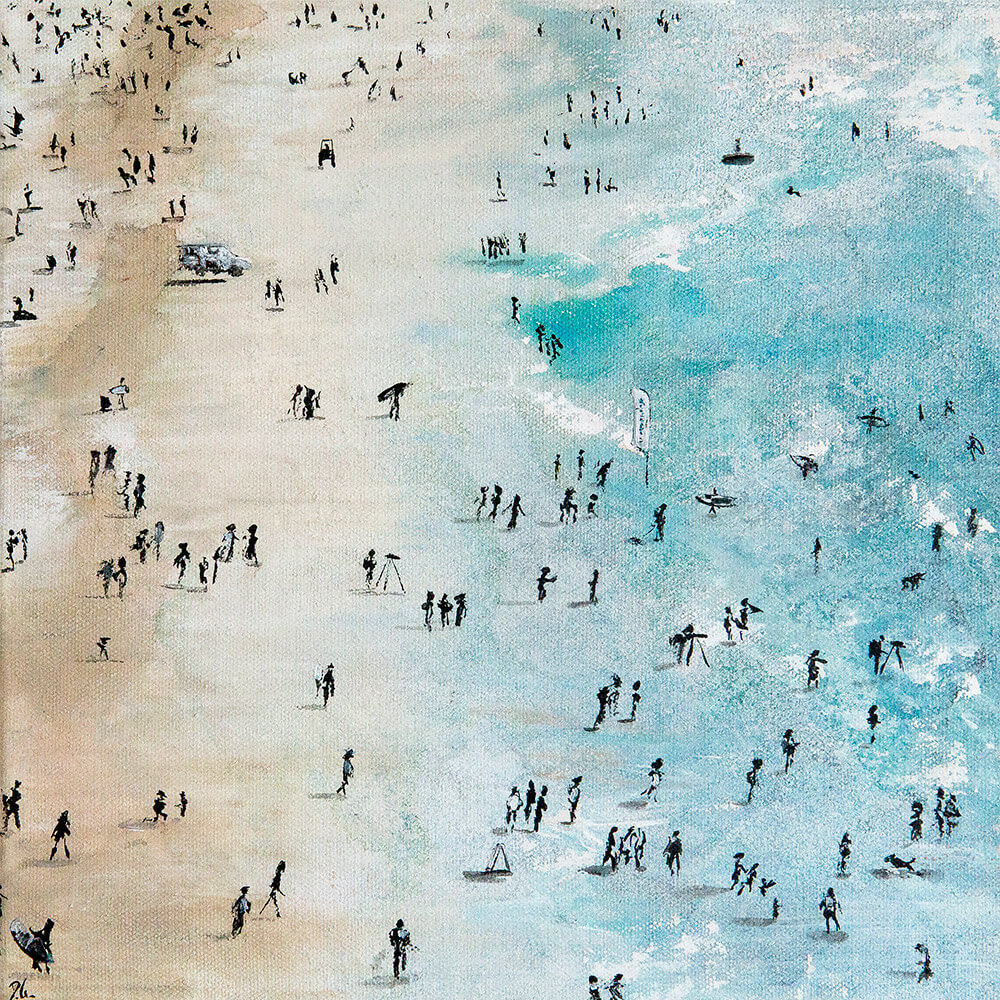
For instance, recently I've started a new collection of beach paintings which verges on the abstract, merely it captures the reality of what you see on a busy summertime'due south twenty-four hours on the beach. It too captures a feeling ormemory of being on that beach. You tin can see this in my paintings Watching Boardmasters, Fistral Beach shown at the beginning of this commodity, and Crantock Beach beneath.
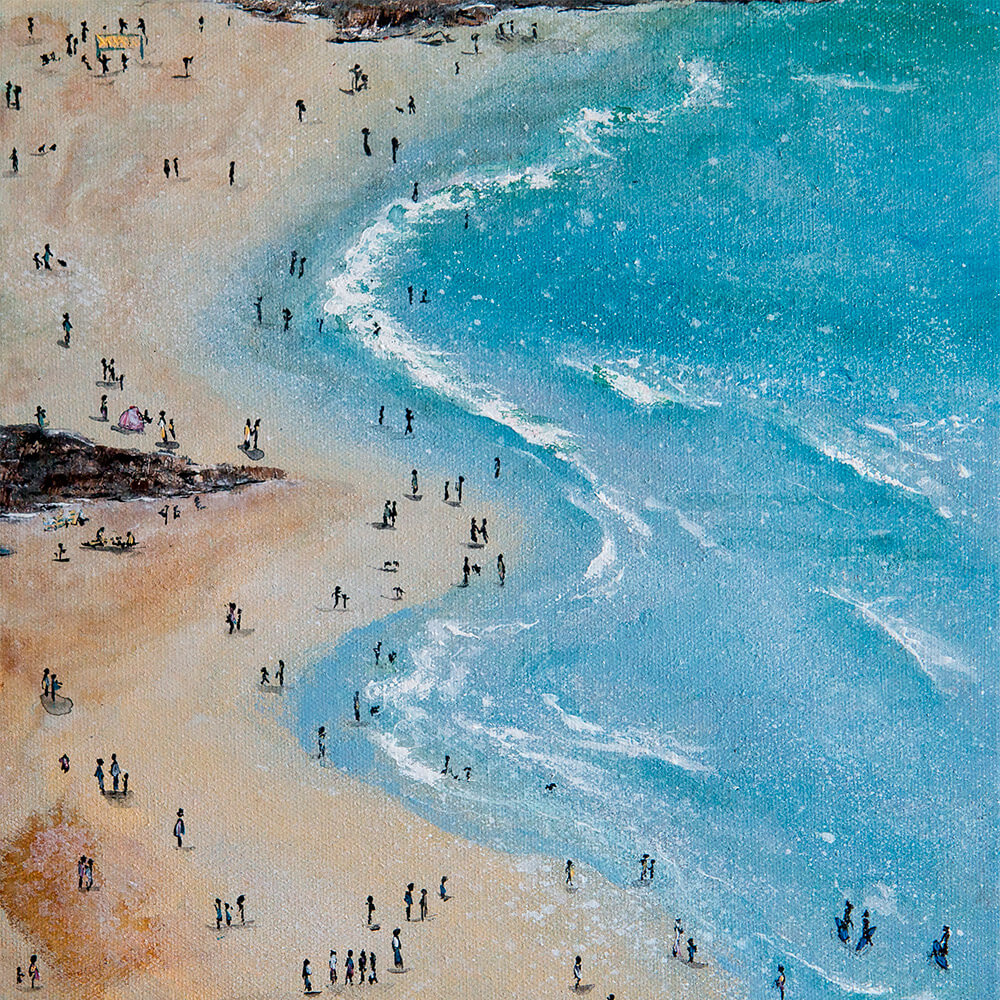
Each time I wait at them, I'k transported to summer holidays—that's the blazon of "special" feeling I'yard going for.
Tips for painting water
I practice a lot of experimentation as I paint, but I also have some techniques that I go along going dorsum to:
one. Let the pigment to menses
Sometimes I'll use heavily pigmented acrylic paints mixed with water so information technology tin be use like watercolour and I allow the water take over. I won't allow information technology drip exactly, simply I will permit it to notice its way across the canvas. It's a fleck of a gamble doing it this manner, simply you lot tin can get some neat, watery effects. I then add just a scrap of white to give a sense of waves crashing onto the embankment.
2. Don't try to be photograph-realistic
I don't think it's worthwhile to try to capture every moving ridge and ripple—information technology will bulldoze you insane. Instead, find means to permit your tools do the work for you. If I'm doing water highlights on the body of water, I'll utilise a castor to gently splash some speckles over the water and that works brilliantly to pull out little highlights of the sun.
iii. Make each reflection your ain
When adding reflections in the water, take some liberties. I've always read that reflections are more than muted than the original; i.e. the darks will be slightly lighter and the lights will exist slightly darker. But don't permit that shape your decisions—sometimes I really practise want my reflections to be equally colourful; it just depends on my composition.
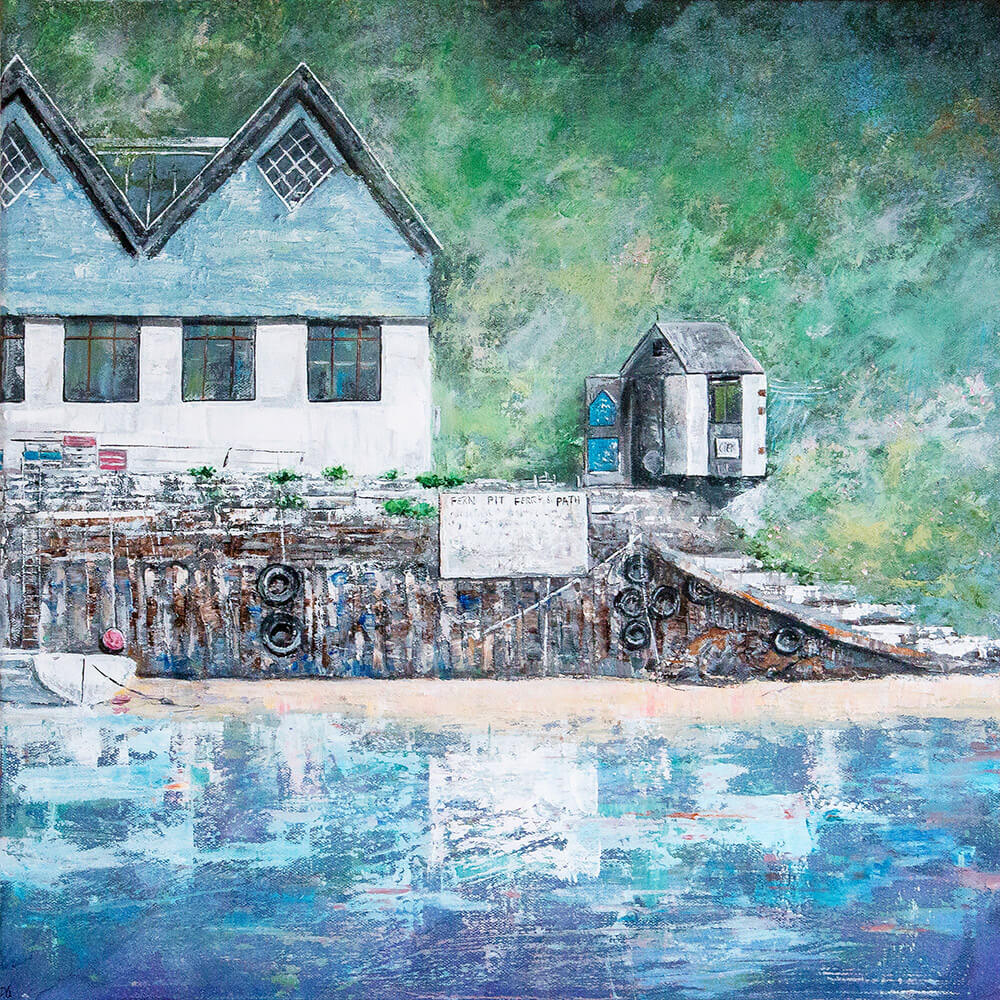
And don't exist afraid to use any color in your reflections—even if it isn't one traditionally found when looking at water. (We think of water as bluish, but information technology'south only blue because it's often reflecting a blue heaven). In a painting, reflections in the water can be like a mirror epitome or it could be just a suggestion of the globe to a higher place it reflects. For reflections I'll often swap to juicy thick oils and a palette knife to get the issue created in At the Foot of the Fern Pit.
4. Be sparing with your palette knife
Attempt using a palette pocketknife yourself to blend and merge colours together when painting water. The crisper edges of colour created past a palette knife brand for a corking h2o reflection. Water moves constantly, and this will assist to create the impression of movement with just a few strokes of the knife. Information technology's all likewise like shooting fish in a barrel to overdo, however, so pick your knife strokes carefully.
5. E'er cheque your reflected lines
Lastly, cheque your reflections to ensure they're directly below the reflected object. Employ a ruler if it helps! I also like to turn my painting upside downwards to spot those problems.
Special thanks to Diane Griffiths for sharing these tips for painting water! To see more of Diane'south seascapes and coastal paintings, delight visit world wide web.handonart.com.

Note: You lot may also be interested in EE's stride-by-step cartoon guide for artists. Click below to learn more!

This post may comprise affiliate links.

Source: https://emptyeasel.com/2019/09/25/5-simple-tips-for-painting-ocean-waves-water/
Posted by: bentleyswuzzin.blogspot.com
0 Response to "How Do You Draw Ocean Waves"
Post a Comment